A person can witness the same event as someone else and walk away with a completely different opinion. Two people may face the same challenge, yet one remains calm while the other feels overwhelmed. These differences aren’t random. They reflect the fascinating ways our minds interpret the world, process emotions, and guide our behavior.
I’ve always been amazed by how often we assume we know why people act the way they do. We might call someone rude, lazy, or selfish without realizing that hidden thoughts, emotions, past experiences, and even biology are influencing their actions. Psychology encourages us to look beneath the surface, and that’s where human behavior starts to make sense.
Understanding the basics of human behavior and how the mind works isn’t just useful for psychologists. It helps parents understand their children, friends communicate better, managers lead more effectively, and individuals develop greater self-awareness. The more we understand the mind, the better we understand ourselves and the people around us.
What Is Human Behavior?
Human behavior refers to everything we think, feel, and do. It includes our emotions, habits, decisions, reactions, communication, and relationships with others. Every smile, every conversation, every difficult choice, and every emotional response is part of human behavior.
Although our actions may seem spontaneous, they are usually influenced by a combination of internal and external factors. Our personality, beliefs, memories, emotions, upbringing, culture, environment, and current circumstances all work together to shape how we behave in a given moment.
One reason psychology is so fascinating is that human behavior is rarely caused by a single factor. Imagine someone becoming angry after receiving criticism. That reaction may have little to do with the criticism itself and much more to do with past experiences, self-esteem, stress levels, or fear of failure. Our actions often have deeper roots than they first appear.
The study of human behavior helps psychologists identify patterns rather than making assumptions. Instead of asking why someone is “bad,” psychology asks what experiences, thoughts, or emotions may have contributed to that behavior. This simple shift encourages empathy without ignoring personal responsibility.
How the Human Mind Works
The human mind is constantly processing information, even when we’re not aware of it. Every second, the brain receives an enormous amount of sensory input through our eyes, ears, skin, nose, and other senses. If we consciously focused on every detail, we’d quickly become overwhelmed. Instead, the mind filters information, deciding what deserves attention and what can safely be ignored.
Our minds work through a combination of conscious and unconscious processes. Conscious thinking involves decisions we actively make, such as solving a math problem, planning a trip, or choosing what to say during a conversation. Unconscious processing happens automatically. It allows us to recognize faces, maintain balance while walking, interpret body language, and react quickly to potential danger without deliberate thought.
Memory also plays a major role in how the mind functions. Our brains continuously store experiences and use them to predict future situations. If touching a hot stove once caused pain, the mind remembers that lesson and helps us avoid repeating the mistake. This ability to learn from experience is one of the reasons humans adapt so well to changing environments.
Emotions are another essential part of the mind’s operating system. Many people think emotions interfere with rational thinking, but psychology shows they often guide decision-making. Even choices that seem purely logical usually involve emotional influences beneath the surface. Without emotions, making even simple decisions becomes surprisingly difficult.
Why People Think Differently
No two minds are exactly alike. Every person develops through a unique combination of genetics, family experiences, education, relationships, culture, and life events. These differences shape how people interpret the same reality.
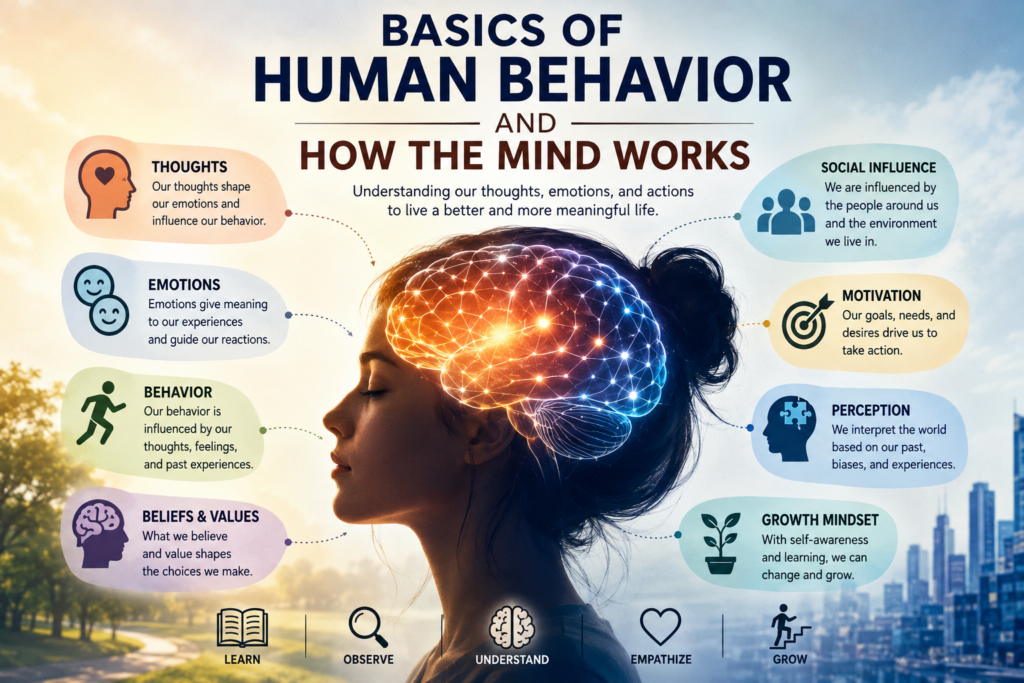
Imagine two coworkers receiving identical feedback from their manager. One sees it as an opportunity to improve, while the other interprets it as personal rejection. The words were identical, but the meaning created by each person’s mind was completely different. Psychology calls this perception, and it explains why reality often feels personal rather than objective.
Beliefs also influence thinking in powerful ways. Once we develop an opinion about ourselves or the world, our minds naturally pay more attention to information that supports those beliefs. This mental shortcut helps us process information quickly, but it can also lead to misunderstandings and biased thinking.
I’ve noticed that many everyday disagreements happen because people assume everyone interprets situations the same way they do. Learning how perception works makes conversations more compassionate because we begin to realize that different viewpoints are often shaped by different life experiences rather than bad intentions.
The Connection Between Thoughts, Emotions, and Behavior
One of psychology’s most valuable lessons is that thoughts, emotions, and behavior constantly influence one another. They don’t exist separately. Instead, they form a continuous cycle that shapes everyday life.
Consider someone preparing to give a presentation. If they think, “I’m going to embarrass myself,” they may begin to feel anxious. Those anxious emotions might cause physical symptoms such as sweating, a racing heartbeat, or shaky hands. As a result, they may speak less confidently, reinforcing their original belief that they aren’t good at public speaking.
The opposite can also happen. Positive thoughts often encourage calmer emotions, leading to healthier behaviors and better outcomes. This doesn’t mean people should ignore challenges or force unrealistic optimism. Instead, psychology encourages balanced thinking based on evidence rather than fear.
Understanding this connection gives people greater control over their lives. While we can’t always choose our first emotional reaction, we can learn to recognize unhelpful thinking patterns and gradually replace them with healthier perspectives that support better decisions and emotional well-being.
Motivation: Why We Do What We Do
Every action begins with a reason, even if that reason isn’t immediately obvious. Motivation is the psychological force that drives people toward goals, whether those goals involve earning a promotion, learning a new skill, helping a friend, or simply getting out of bed on a difficult morning. Sometimes motivation comes from within, fueled by curiosity, passion, or personal satisfaction. Other times it comes from external rewards such as money, praise, or recognition.
Our motivation changes throughout life because our priorities change. A child may study to make their parents proud, while an adult may continue learning because they genuinely enjoy personal growth. Psychology shows that people tend to stay committed to goals longer when they feel internally motivated rather than pressured by outside expectations.
The mind is also sensitive to progress. Small achievements release chemicals in the brain that create feelings of satisfaction, encouraging us to continue. That’s one reason breaking large goals into smaller milestones often feels more manageable. The brain enjoys seeing evidence that effort is paying off.
How Habits Shape Human Behavior
Many of the things we do every day require surprisingly little conscious thought. Brushing our teeth, checking our phones, driving familiar routes, or making morning coffee often happen almost automatically. These repeated behaviors become habits because the brain is designed to conserve energy whenever possible.
A habit forms when the mind connects a particular situation with a repeated action. Over time, the brain builds a shortcut, allowing the behavior to happen with less mental effort. This process is incredibly useful because it frees our attention for more complex tasks. At the same time, it explains why unhealthy habits can become so difficult to break.
Changing behavior usually requires more than willpower alone. It often involves replacing an old habit with a healthier one while keeping the same routine or trigger. I’ve found that people are often kinder to themselves once they realize habits aren’t signs of weak character. They’re patterns the brain has learned through repetition, and with enough consistency, those patterns can be rewritten.
Personality and Individual Differences
One of the most interesting aspects of psychology is that people can respond differently even when placed in identical situations. Personality plays a major role in these differences. It reflects the unique combination of traits, preferences, emotional tendencies, and thinking styles that make each individual distinct.
Some people naturally enjoy meeting new people and gain energy from social interactions, while others feel most comfortable spending quiet time alone. Neither approach is inherently better. They simply represent different ways of engaging with the world. Personality also influences how people respond to stress, solve problems, express emotions, and build relationships.
Although personality has biological foundations, it continues to develop throughout life. Experiences, education, relationships, and personal reflection all contribute to gradual change. This flexibility reminds us that while certain traits may remain stable, personal growth is always possible.
The Power of Social Influence
Human beings are naturally social creatures. From childhood onward, we learn by observing others, copying behaviors, and adapting to the expectations of the groups around us. Even people who value independence are influenced by family, friends, workplaces, and culture in ways they may not immediately recognize.
Social influence explains why trends spread so quickly and why people sometimes change their opinions after hearing different perspectives. The desire to belong is deeply rooted in human psychology because cooperation helped our ancestors survive. That instinct still shapes modern behavior, whether we’re choosing what to wear, what to buy, or how to respond in social situations.
This influence isn’t always negative. Positive environments encourage healthier habits, stronger confidence, and emotional resilience. Spending time with supportive people often changes our thinking without us even noticing because attitudes and behaviors can be surprisingly contagious.
Common Thinking Errors the Mind Makes
The human mind is remarkable, but it isn’t perfect. To process information quickly, the brain relies on mental shortcuts called cognitive biases. Most of the time these shortcuts are helpful because they allow us to make decisions without analyzing every detail. Occasionally, though, they lead us to inaccurate conclusions.
For example, people often remember negative experiences more vividly than positive ones because the brain naturally pays closer attention to potential threats. Others may judge someone based on a first impression and unconsciously ignore information that contradicts it. These patterns happen automatically, not because people intend to be unfair, but because the mind is constantly trying to simplify a complex world.
Learning about these biases encourages humility. Instead of assuming our first thoughts are always correct, psychology teaches us to pause, gather evidence, and remain open to changing our minds when new information appears.
Why Learning Psychology Changes the Way You See People
One of the greatest benefits of studying psychology is that it replaces quick judgments with genuine curiosity. Instead of immediately labeling someone as rude, lazy, or difficult, we begin asking what experiences, emotions, or circumstances may have influenced their behavior. That shift doesn’t excuse harmful actions, but it helps us understand them more accurately.
I’ve found that even a basic understanding of psychology changes everyday interactions. Conversations become more thoughtful, disagreements feel less personal, and relationships often improve because we become better listeners. Self-awareness grows as well. Many of our own habits, fears, and emotional reactions begin to make sense when viewed through the lens of psychology.
The basics of human behavior and how the mind works remind us that every person carries an invisible story shaped by biology, experience, relationships, and learning. The more we understand those influences, the easier it becomes to communicate with empathy while continuing to grow ourselves.
The human mind remains one of the most extraordinary subjects we can explore. It shapes every decision we make, every relationship we build, and every goal we pursue. The journey of understanding it never truly ends, and that’s part of what makes psychology so endlessly fascinating. Every new insight offers another opportunity to better understand ourselves and the people who share this world with us.
Daily Dose of Psychology
Did you know?
Your brain makes thousands of decisions every day, but most happen automatically without your conscious awareness. Psychologists estimate that much of our daily behavior is driven by habits and unconscious mental processes, which is why understanding how the mind works is the first step toward making healthier choices and creating lasting positive change.